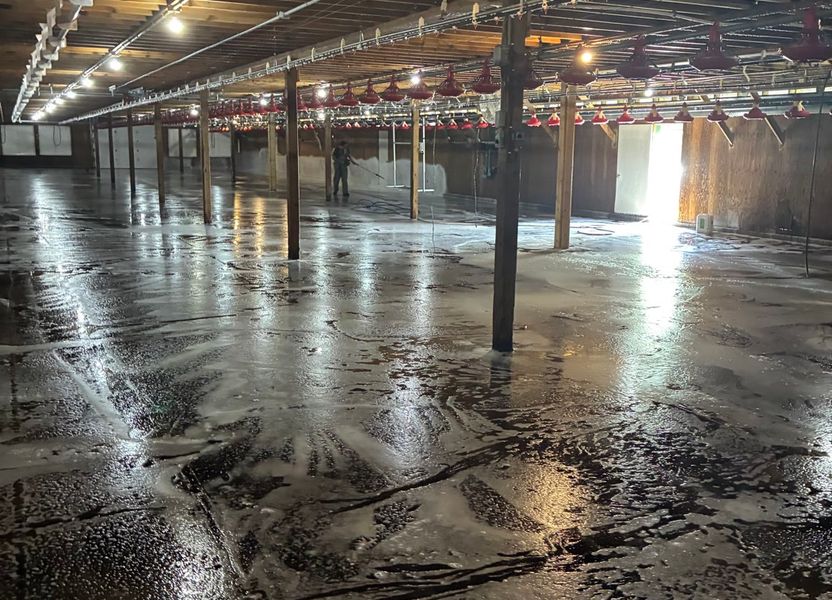
Poultry barn
A poultry barn, everything cleaned up
“They worked hard, were easy to deal with, and did a great job getting everything cleaned up.”
Thomas N. · Poultry barn
ServicesPoultry barns
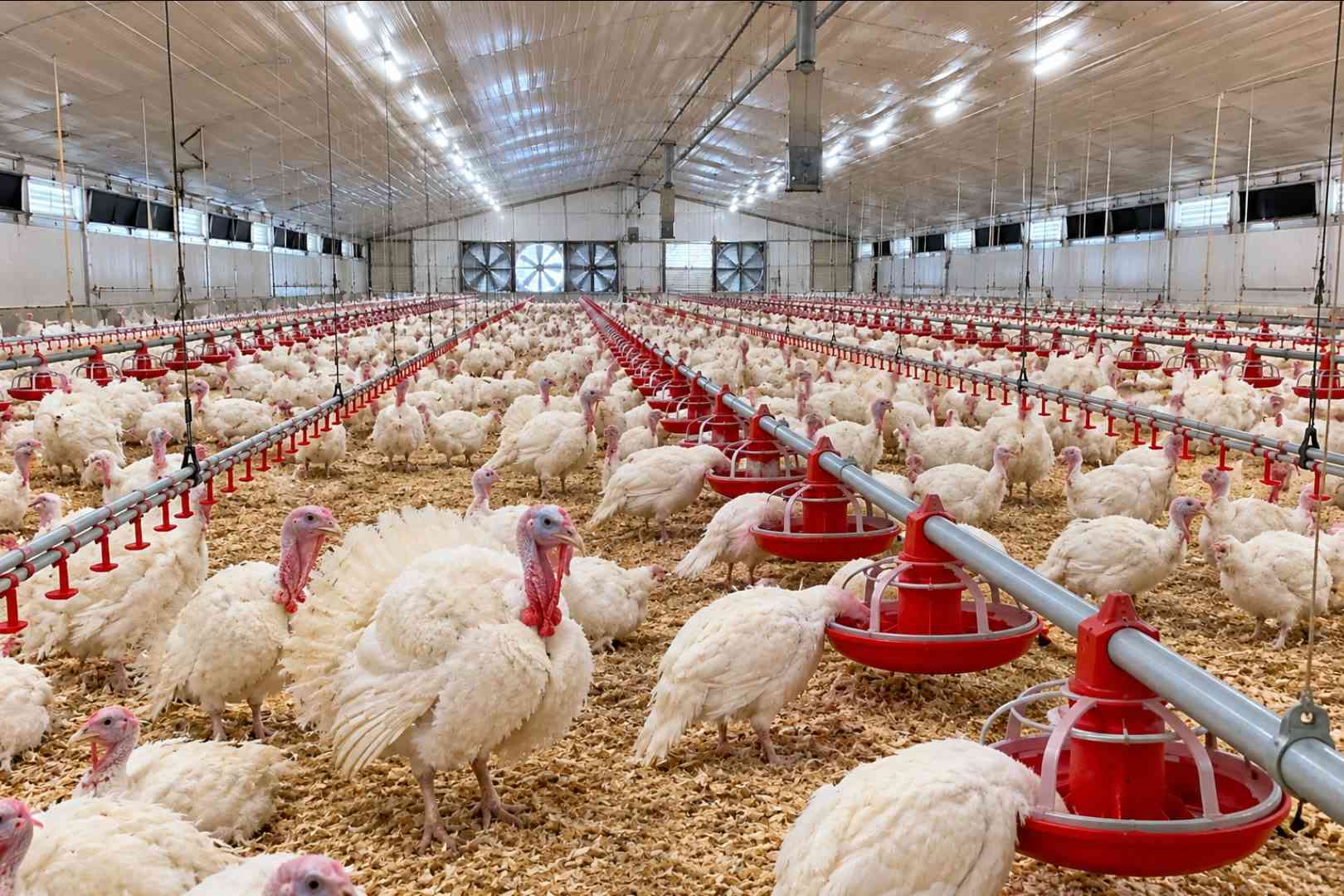
We wash and disinfect chicken, turkey, duck and brooder barns between shipping and placement, ceilings to floors, with the fans, heaters and cool cells. Our rig brings hot and cold water pressure washers and hooks up to your water; tell us both dates and we'll plan the wash day around them.
1–2 days*
For most barns; bigger ones 2–3.
Ceilings to floors
Heaters, fans and cool cells too.
Between flocks
And the annual full wash.
Hot or cold water
Our washers, your hydrant.
Windsor to Kingston
Lake Erie to Georgian Bay.
* Typical; your quote confirms it.
01 · When to book
Tell us your ship and placement dates. We’ll get back to you to agree a day and a price.
Chicken barns1–2 days on site* (2–3 days* for two-storey or very large barns), then 24–48 h to dry
About 5–6 flocks a year. Book when the flock goes in. Short notice? Call or text: if we have room, we'll come. Litter comes out within 48–72 h of shipping.
The annual full wash (Chicken Farmers of Canada, Option 1)1–2 days on site*
Option 1 asks for a pressure wash of the barn and equipment, with detergent or disinfectant, at least once a year. Book when that flock goes in.
Turkey barns after the holiday birds ship1–3 days per barn*, then 24–48 h to dry (longer in the cold)
Thanksgiving and Christmas account for about 37% and 45% of the whole turkeys sold in Canada (2025). Book when the holiday flock goes in.
Brooder barnsYour quote gives the time
On brood-and-move turkey farms, poults leave the brooder barn at about 5–6 weeks. Book when the group goes in.
Duck barns1–2 days on site*, plus soak time
Wet bedding makes a heavier wash. The barn has to be dry and warm before the ducklings arrive.
Winter turnoversAs above, plus ½–1 day more drying*
Keep the barn heat on through the wash and the drying. Below 10 °C, many disinfectants need a longer contact time. Near freezing, we agree a heated barn or another method the label allows with you first, so the disinfectant doesn't freeze before its contact time is up.
Fans, heaters and cool cellsAdds about 2–4 h*
Mississippi State's fan guide says to clean shutters, blades and guards after every flock. Dirty shutters can cut a fan's airflow by up to 40% (University of Kentucky).
Fans, shutters and cool cellsAbout 10–20 min per fan*; 2–3 h per cool-cell wall*
Take the winter covers off hot-weather fans first. Cool-cell pads get a gentle low-pressure rinse, never a pressure washer.
Heaters and broodersAbout 15–30 min per unit*
Heaters and brooders off, cool and gas shut first. Burner service stays with your licensed gas technician.
02 · What we wash
Tell us what you want done. We wash top to bottom, so the dust from above never lands on a clean floor.
You do
We do
03 · Before & after
Two pairs from one poultry barn in June 2026: a barn heater on Saturday and again on Sunday, and a row of cool-cell pads and their gutter before and after the wash. Nothing is added or removed.
More from this work in the gallery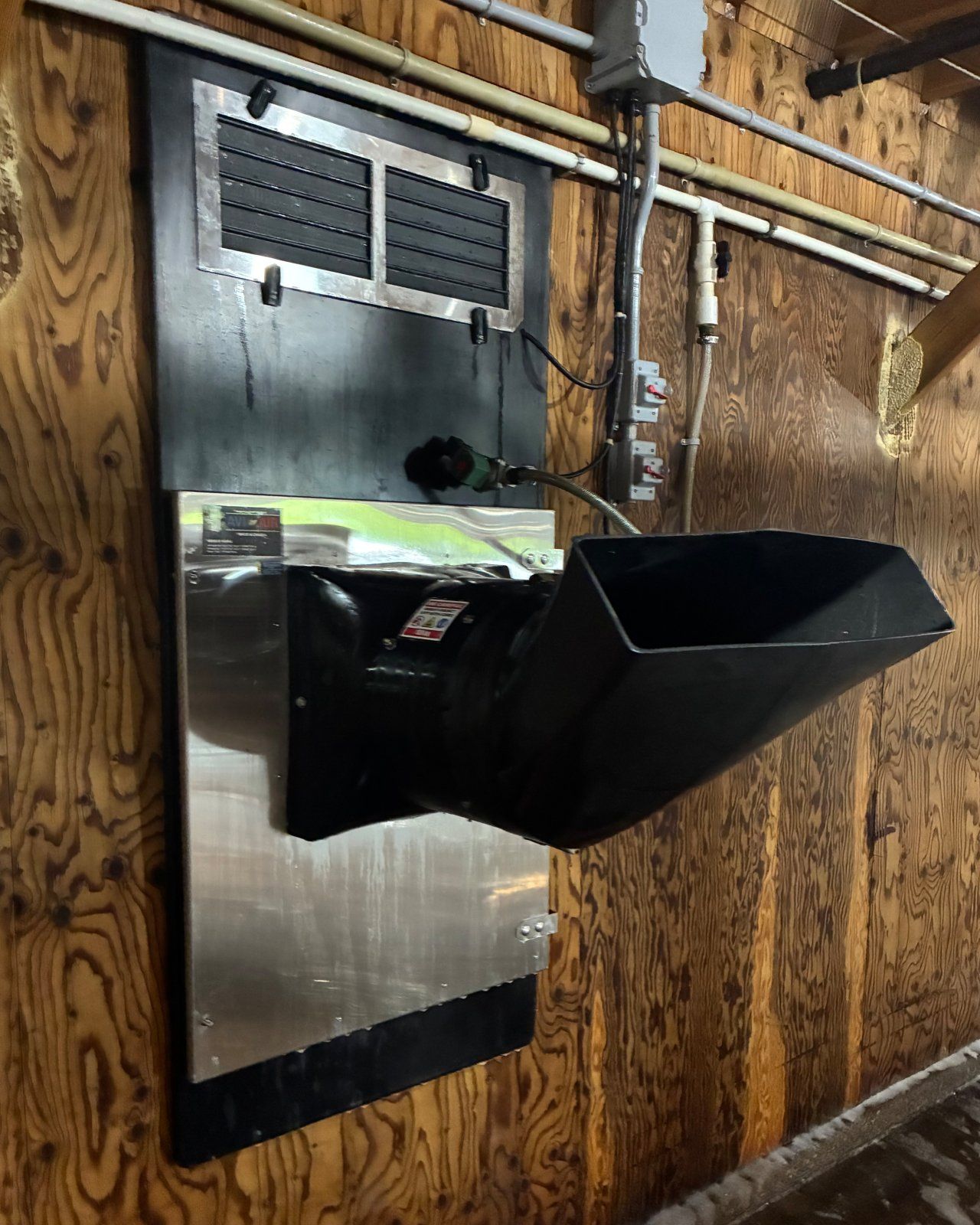
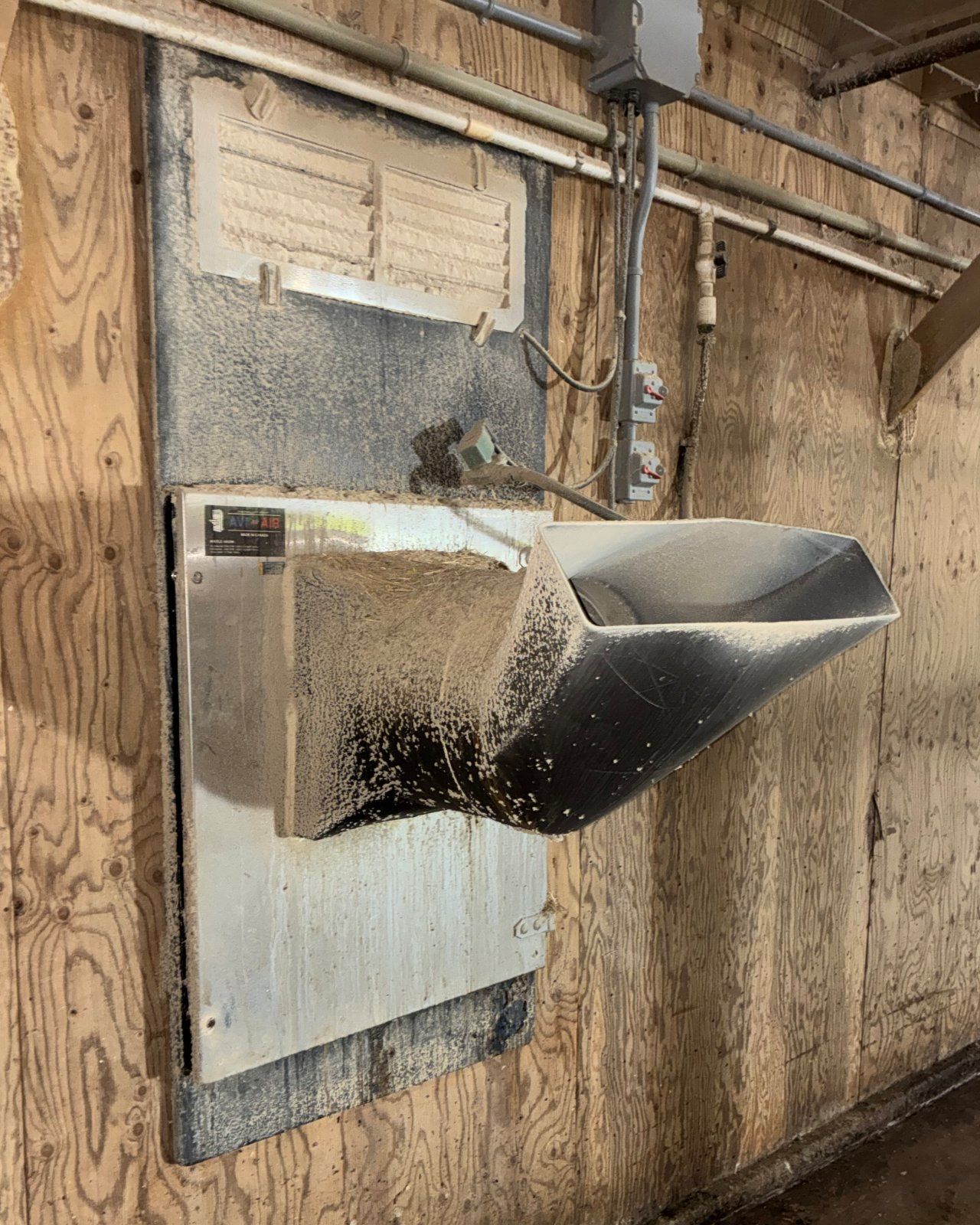
Poultry barn heater · next day · June 2026
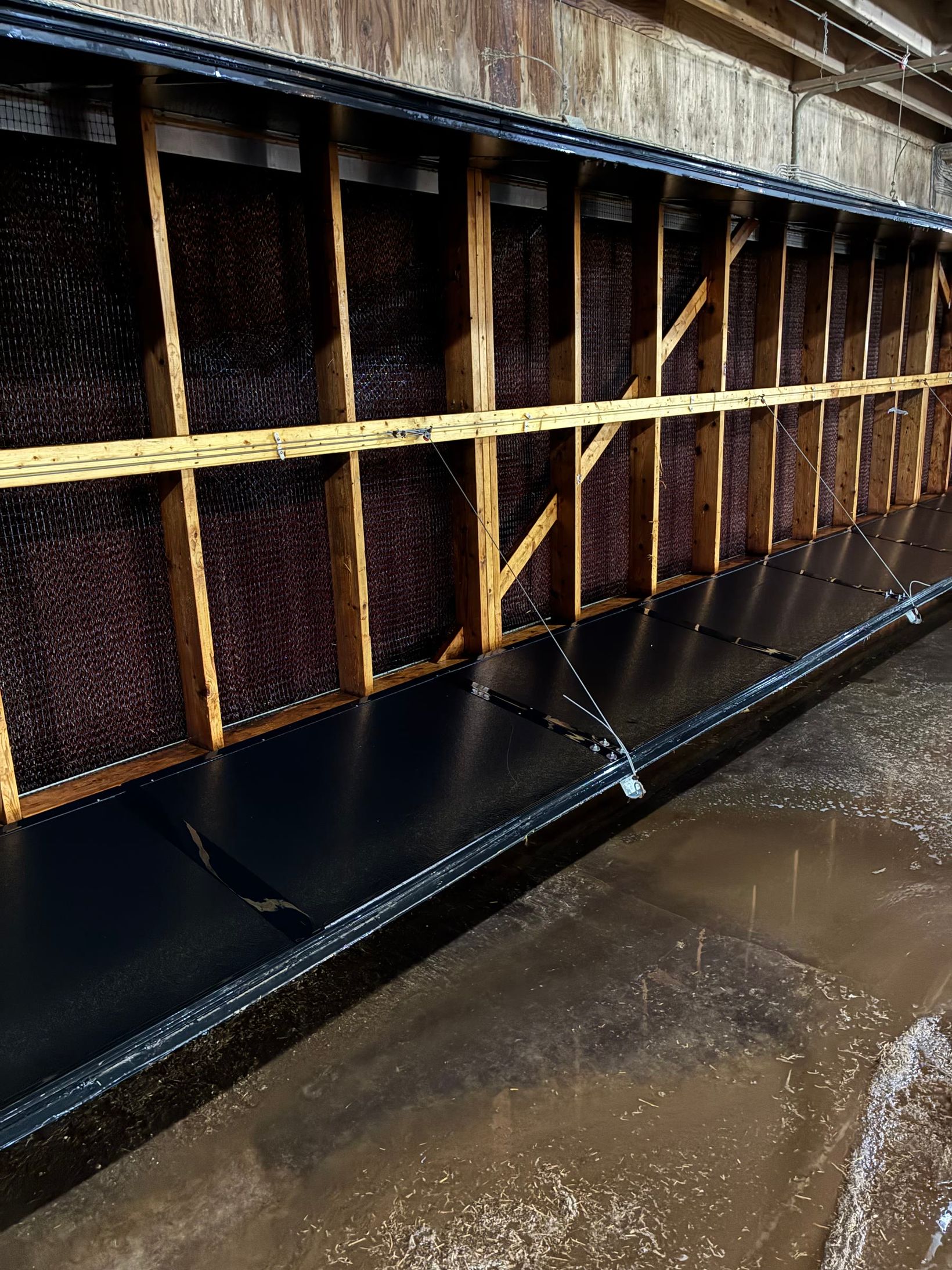
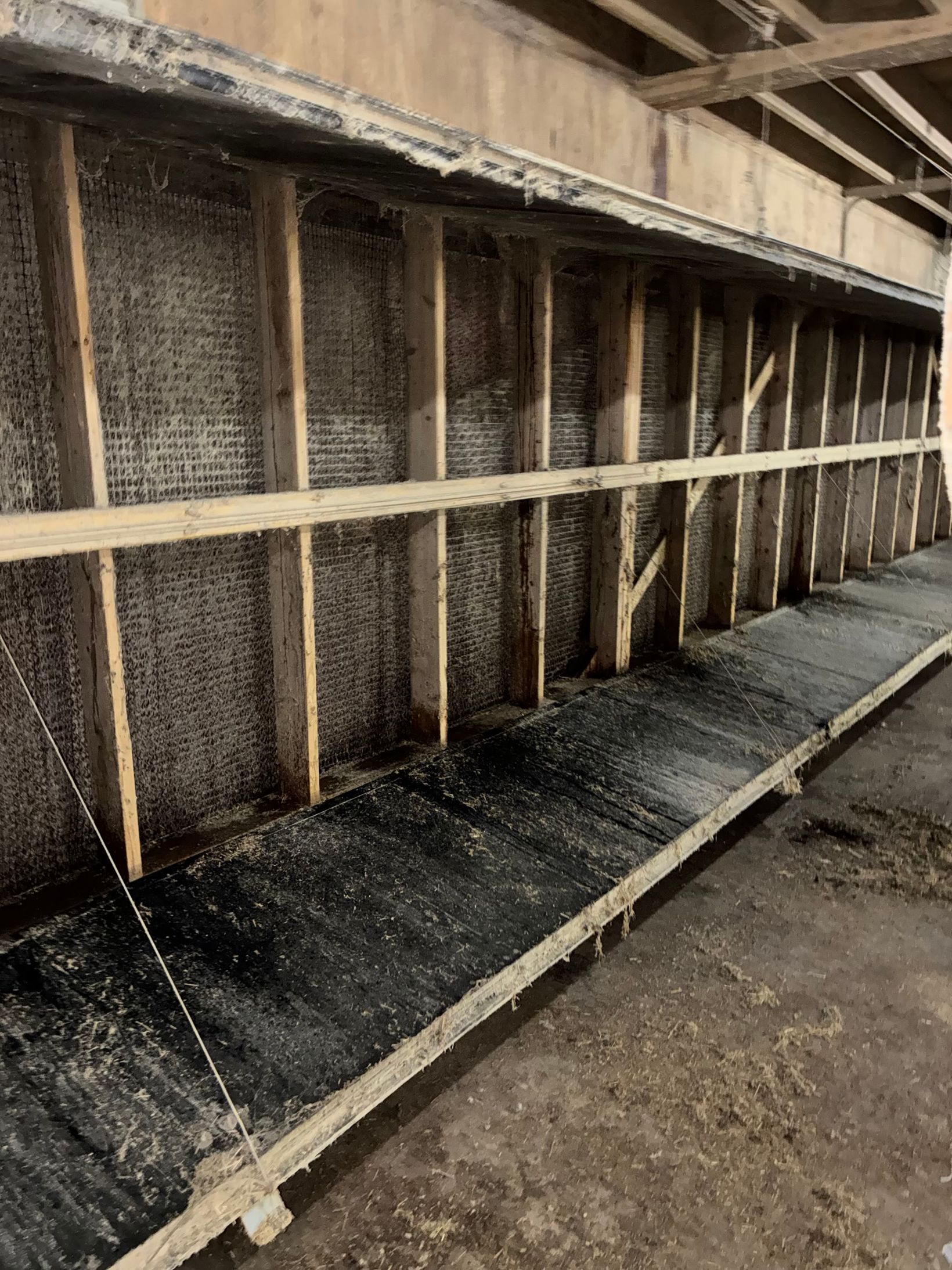
Cool-cell pads and gutter · same day · June 2026
04 · Farm stories
Poultry barn
“They worked hard, were easy to deal with, and did a great job getting everything cleaned up.”
Thomas N. · Poultry barn
References
Most farmers hear about us from a neighbour. Tell us your county and your poultry barn, and we’ll ask a poultry customer nearby if they’re happy to take your call. No sales pitch from us.
05 · Pricing
Every poultry barn is different, so we price yours after a few questions or photos. These are the things that change the price:
06 · Questions
Something else on your mind? Call or text — you’ll talk to the crew, not a call centre.
That's how we book it. Tell us both dates and we'll pick a wash day that fits. Chicken Farmers of Canada's example protocol allows at least 24–48 hours to dry before bedding.
Most single-storey barns take 1–2 days on site*, and two-storey or very large barns 2–3 days*. Turkey barns can take 1–3 days*. Then allow 24–48 hours to dry. Your quote gives the time for your barn.
Yes. Our rig carries hot and cold water pressure washers and hoses, not water. We hook up to your hydrant or tap. If your well is slow or also waters the birds, tell us when you book.
Both: our washers run hot or cold. Chicken Farmers of Canada's barn-washing factsheet says warm or cold water can be used for the pressure wash, although warm water may take less time. Soap goes on only where it's needed: animal-safe, matched to your farm's specs.
Both. We wash first, because disinfectant doesn't work on dirt. Then we disinfect with a Health Canada-registered product (look for the DIN) at the label rate and contact time: your vet's choice, or a product we agree with you.
A pressure wash of the barn and equipment, with detergent or disinfectant, at least once a year. Not sure which option your farm is on? Check with your auditor or vet, and we'll book around it.
Yes, they're part of a poultry barn wash: add them when you book. They add about 2–4 hours* to a turnover. Dirty fan shutters can cut a fan's airflow by up to 40% (University of Kentucky's poultry manual), and Mississippi State's fan guide says to clean shutters, blades and guards after every flock.
Yes, with the barn heat on. Below 10 °C, many disinfectants need a longer contact time. Near freezing, disinfectant has to stay unfrozen for its full contact time, so we agree a heated barn or another method the label allows with you first. Allow extra drying time in the cold.
We quote by the job: the barn's size and storeys, how much build-up is left, what's in the scope, disinfecting and whose product, and the season. Tell us about your barn and we'll quote it.
No. Pads get a gentle, low-pressure rinse: Aviagen's cleaning guide says never to use a pressure washer on them. The frames, gutters and inlet doors can take a pressure wash.
No. We wash the heater, not the gas side: housings, louvres and hoods, and the coil and fan inside where we've agreed it with you. In Ontario, burner service and gas repairs need a licensed gas technician (O. Reg. 212/01), so book yours for the same turnover.
07 · More services
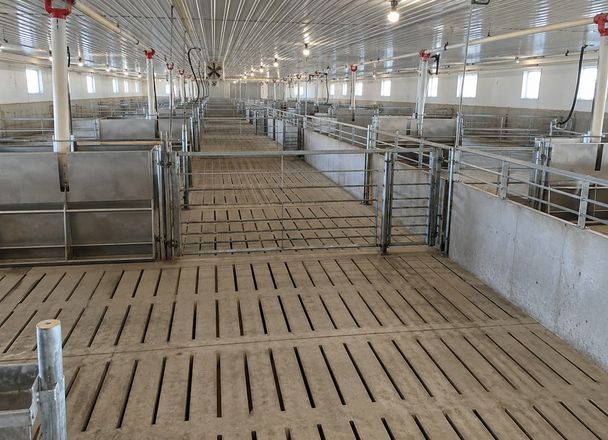
Nursery · Finishing rooms
Pens, gates, slats, feeders, fans and heaters power washed room by room, between batches.
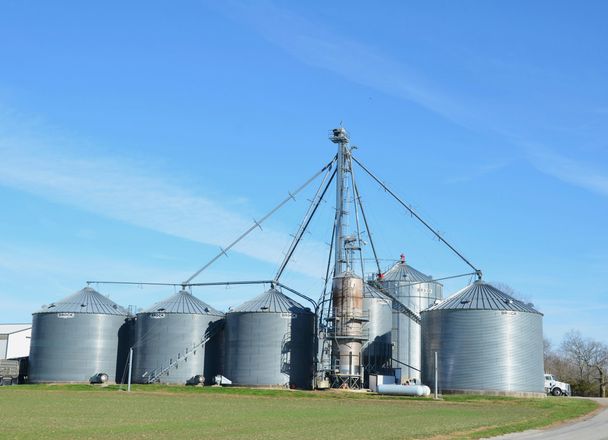
Elevators · Grain dryers
Grain elevators and dryers washed down once the grain is out, clearing the dust and fines of harvest.
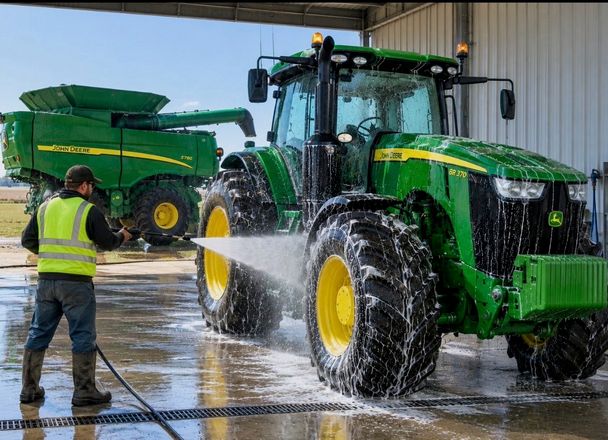
Tractors · Skid steers · Combines
Hot or cold water and degreaser where needed — mud, grease and manure off, ready for the shed, the shop or the sale.
Anything else?
We’ll tell you straight if it’s a job for us.
Ready when you are