Dairy barn ·
A dairy barn, left in great shape
“Everything was cleaned really well and they left the barn in great shape.”
Kevin M. · Dairy barn
ServicesDairy barns
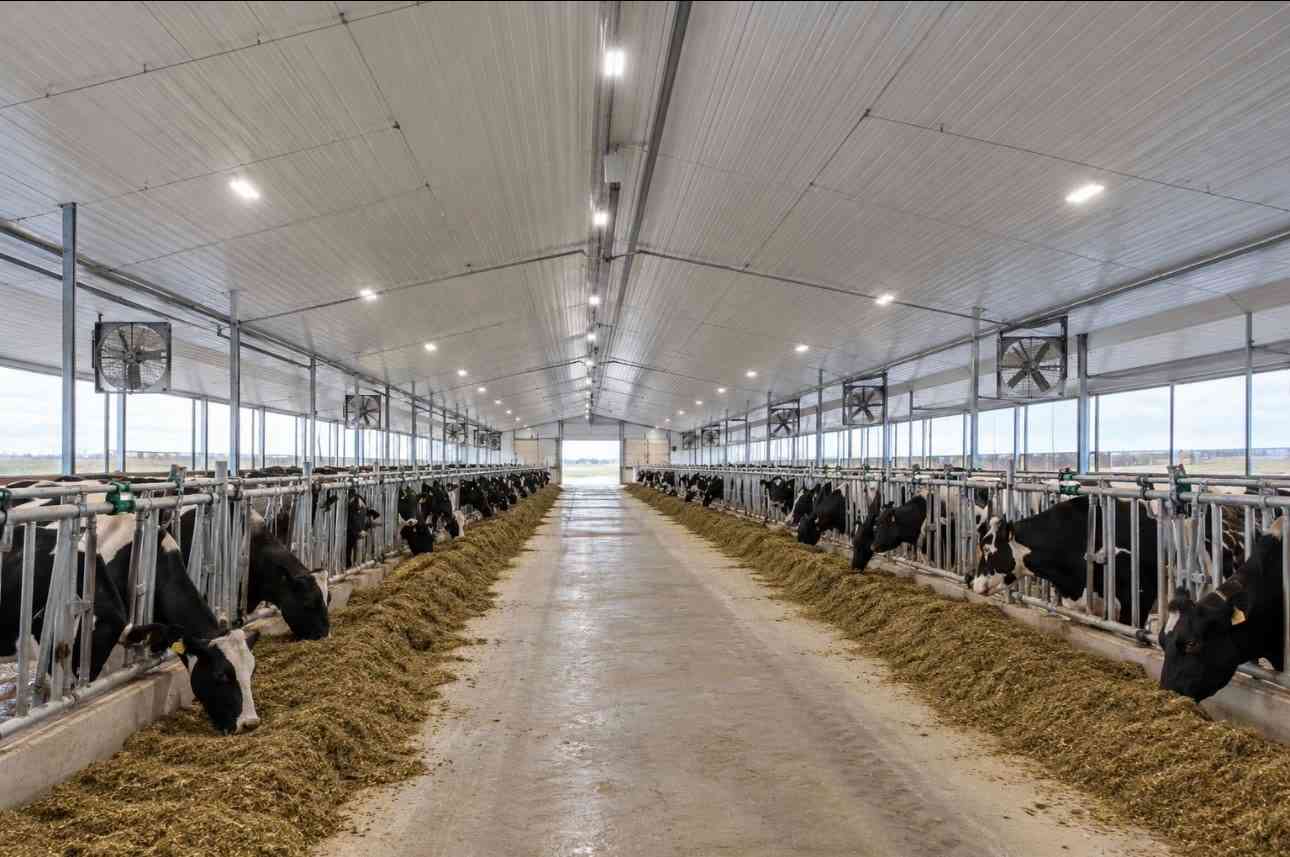
We wash dairy barn ceilings and liners, fans, chimneys and head gates at your farm, with hot and cold water pressure washers hooked up to your water. Book it as your annual barn wash: Ontario's milk regulation (Reg. 761, s.9) asks for stable walls, ceilings and partitions to be cleaned, whitewashed or painted at least once a year.
About 1–3 days*
Tie-stall barns: about a day.
Ceilings to head gates
Liners, fans, vents, chimneys.
At least once a year
Ontario’s milk regulation asks for it.
Hot or cold water
Our washers, your hydrant.
Windsor to Kingston
Lake Erie to Georgian Bay.
* Typical; your quote confirms it.
01 · When to book
Pick the season that suits your herd, or call when it’s due. We’ll get back to you to agree a day and a price.
Dec–Feb
Warm, closed tie-stall barnsAbout 1 day*
Only barns that stay above freezing inside. Plan ventilation so the barn dries.
Apr–May
Annual barn wash, spring slotTie-stall about 1 day* · freestall or robot barn 1–3 days*
Curtain-sided barns: wait until nights stay above freezing, usually late April. Warm, closed tie-stall barns can go in March.
Jun–Aug
Tie-stall barns with the herd out on pastureAbout 1 day*
With the cows in, summer means heat, flies and fans running.
Sep–Oct
Annual barn wash, before the coldTie-stall about 1 day* · freestall or robot barn 1–3 days*
Nights start freezing in October. Curtain-sided barns are best done by mid-October.
02 · What we wash
Tell us what you want done. We wash top to bottom, so the dirt from above never lands on clean stalls.
You do
We do
03 · Before & after
A freestall barn we washed in October 2025: the ceiling beside one ridge vent, at 9:29 and again at 11:21 the same morning. Mid-job, not the finished barn. Photos are lined up and cropped; at most, the overall brightness is matched.
More from this work in the gallery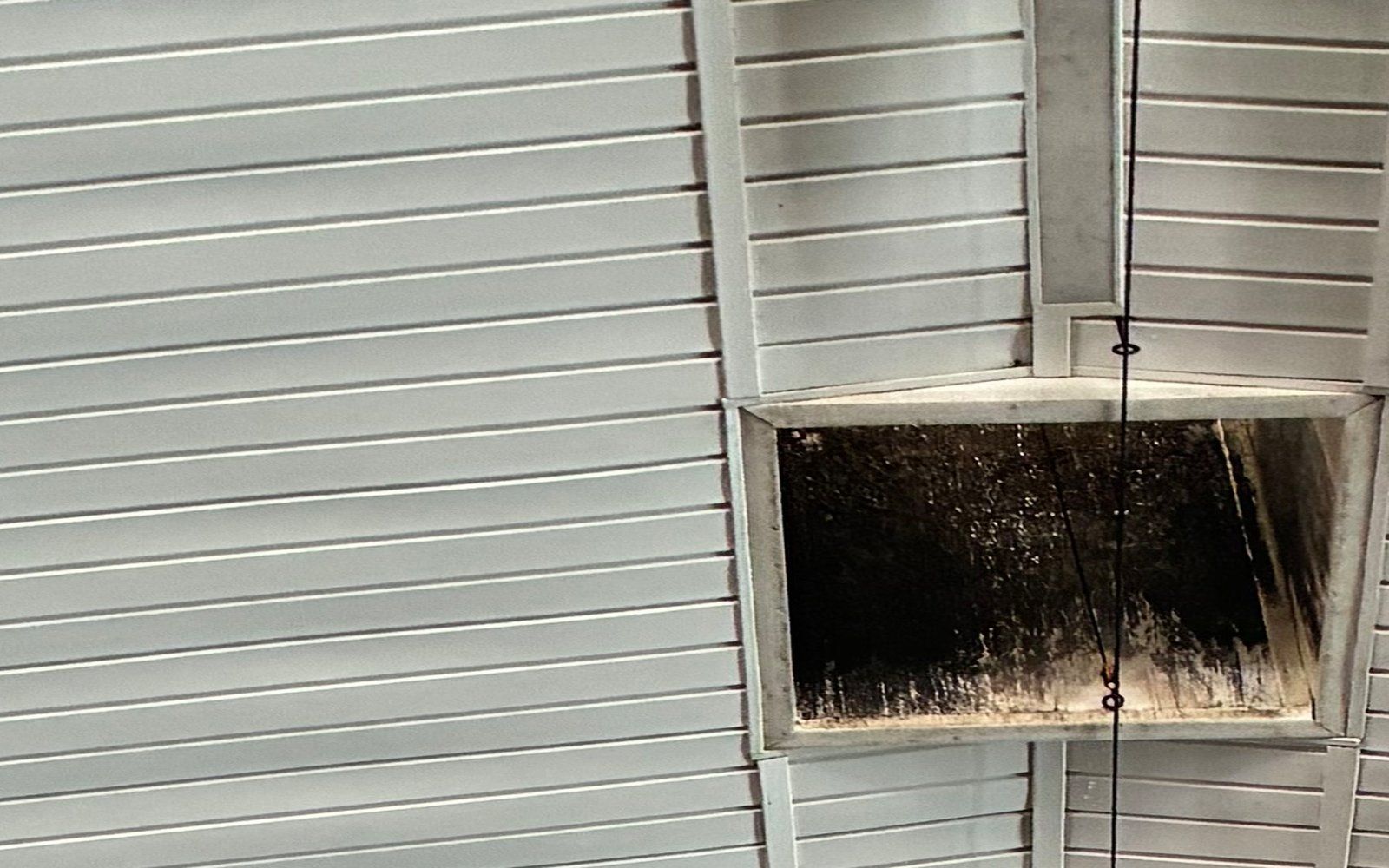
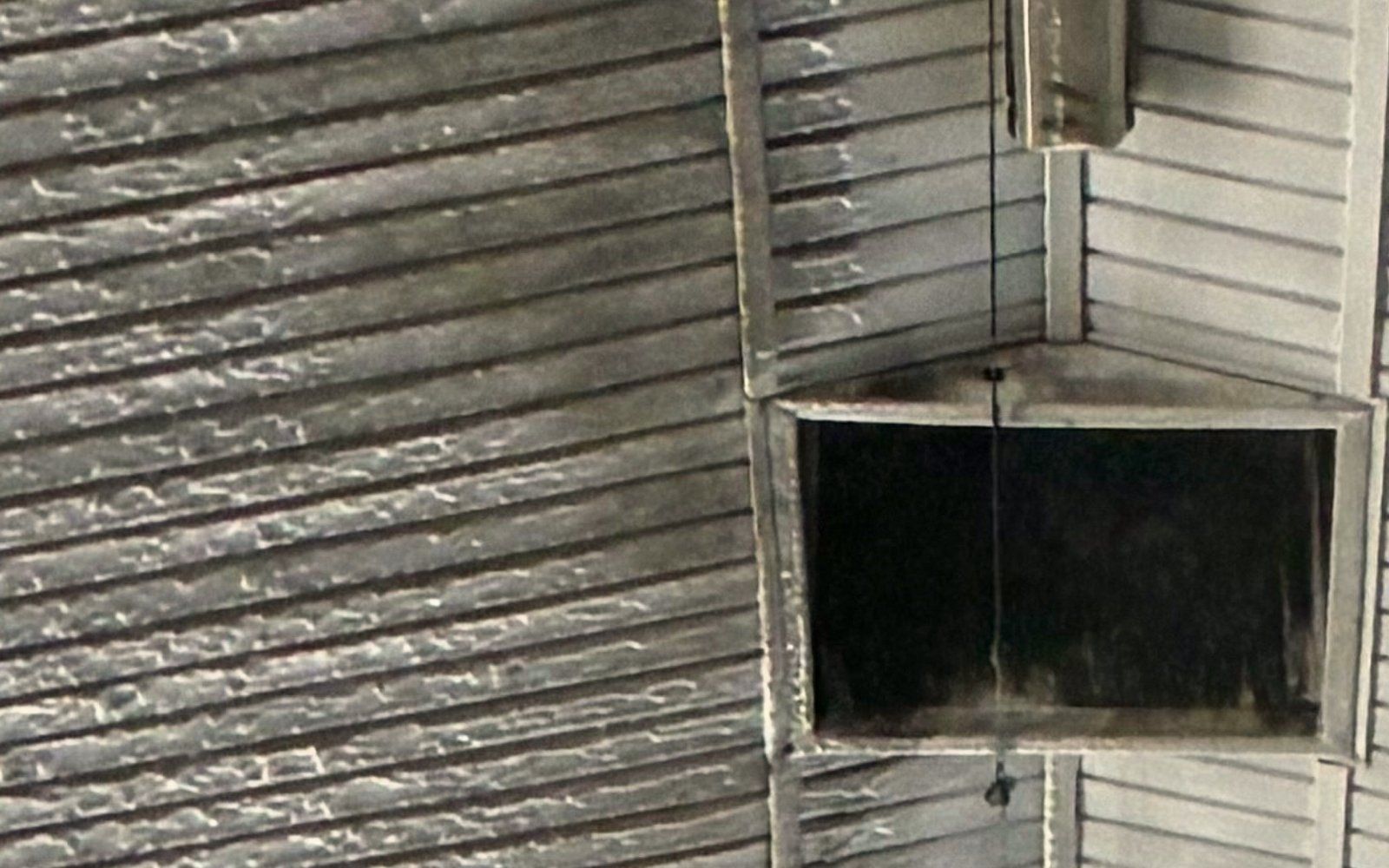
Dairy barn ceiling, mid-job · same morning · Oct 2025
04 · Farm stories
Dairy barn ·
“Everything was cleaned really well and they left the barn in great shape.”
Kevin M. · Dairy barn
References
Most farmers hear about us from a neighbour. Tell us your county and your dairy barn, and we’ll ask a dairy customer nearby if they’re happy to take your call. No sales pitch from us.
05 · Pricing
Every dairy barn is different, so we price yours after a few questions or photos. These are the things that change the price:
06 · Questions
Something else on your mind? Call or text — you’ll talk to the crew, not a call centre.
At least once a year. Ontario's milk regulation (Reg. 761, s.9) asks for stable walls, ceilings and partitions to be cleaned, whitewashed or painted that often, and kept clean.
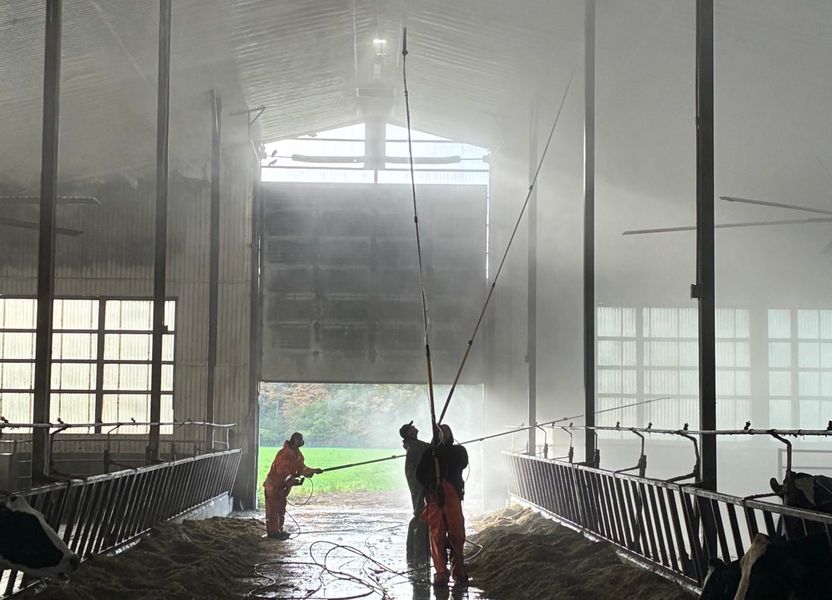
Yes, working around milking. We agree the sections and any cow moves with you before the day. On our October 2025 job the herd stayed in: the cows ate at the feed barrier while the crew washed the ceiling overhead.
Yes. Our rig carries hot and cold water pressure washers and hoses, not water. We hook up to your hydrant or tap. If your well is slow or also waters the herd, tell us when you book.
Both: our washers run hot or cold, whichever the job needs. Hot water is quicker on grease and caked-on dirt; cold water does for dust and rinsing. Soap or disinfectant goes on only where it's needed: animal-safe, matched to your farm's specs.
About a day* for a tie-stall barn. A freestall or robot barn takes 1–3 days*, washed in sections. Your quote confirms yours.
The best windows are spring (April and May) and fall (September and October). Warm, closed tie-stall barns can go in winter. Short notice? Call or text: if we have room, we'll come.
Yes: fans, ventilation chimneys and ridge vents are part of a dairy barn wash. Lock out the fans in the section we're washing first.
We wash the outside of milking robots and milking machines, Lely and DeLaval included, as part of your barn wash. We don’t wash their internal components. Cleaning that needs dry ice isn’t something we do ourselves: we arrange it through a partner. Tell us what you need when you book.
Yes. Bird netting that keeps birds out of the barn gets washed with the rest of the barn, and we flush the feed alleys. Add them to your list when you book.
We wash the barn so it’s ready for whitewash. Whitewash goes on clean, dry wood, so once the barn is dry, you or your whitewash crew can put it on.
By the job: barn type and size, ceiling height and build-up, how many fans and whether the cows stay in. A few phone photos help us quote.
07 · More services
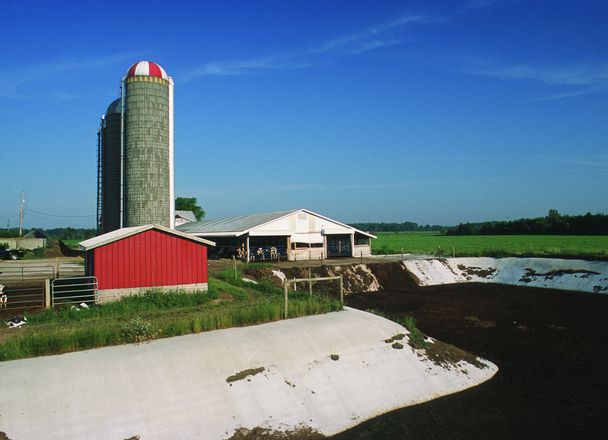
Pit walls · Pit floors
Pit walls and floors washed back to bare concrete after your applicator pumps out.
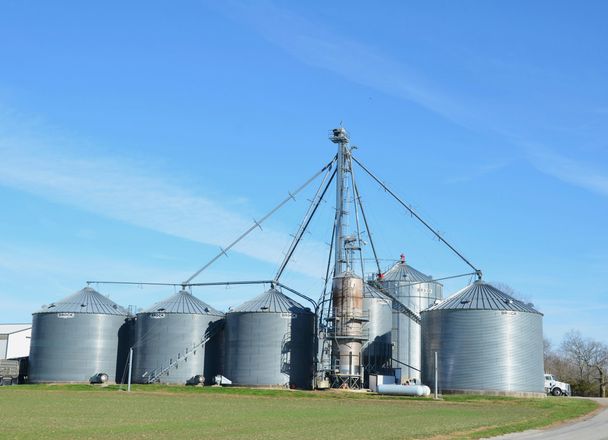
Elevators · Grain dryers
Grain elevators and dryers washed down once the grain is out, clearing the dust and fines of harvest.
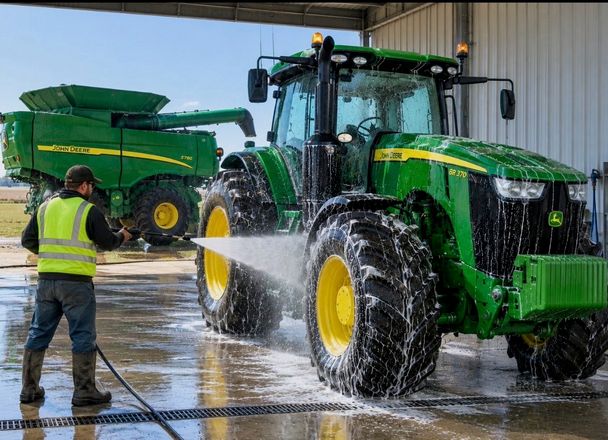
Tractors · Skid steers · Combines
Hot or cold water and degreaser where needed — mud, grease and manure off, ready for the shed, the shop or the sale.
Anything else?
We’ll tell you straight if it’s a job for us.
Ready when you are