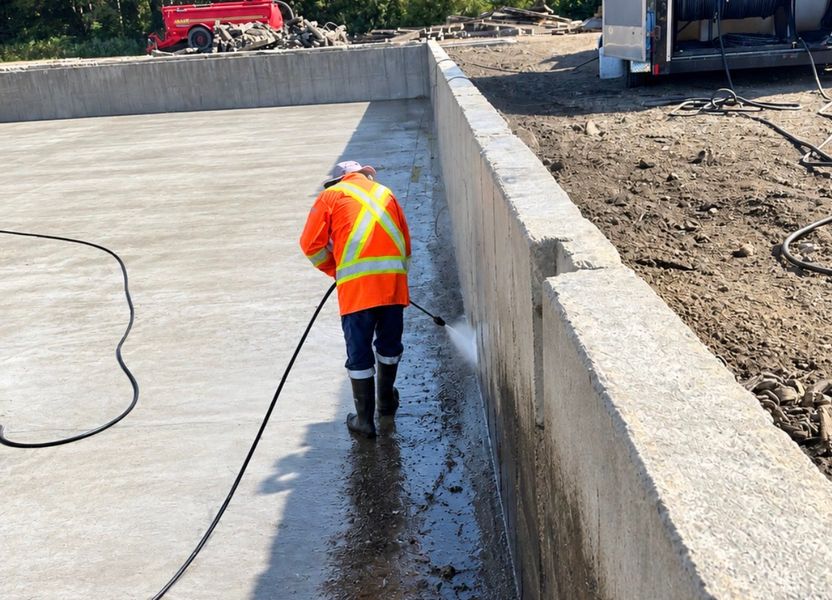
Manure pit · Norfolk County ·
A concrete pit, washed back to bare walls
Thursday, the manure line off the walls. Saturday, the floor washed clean one pass at a time.
Farm kept private
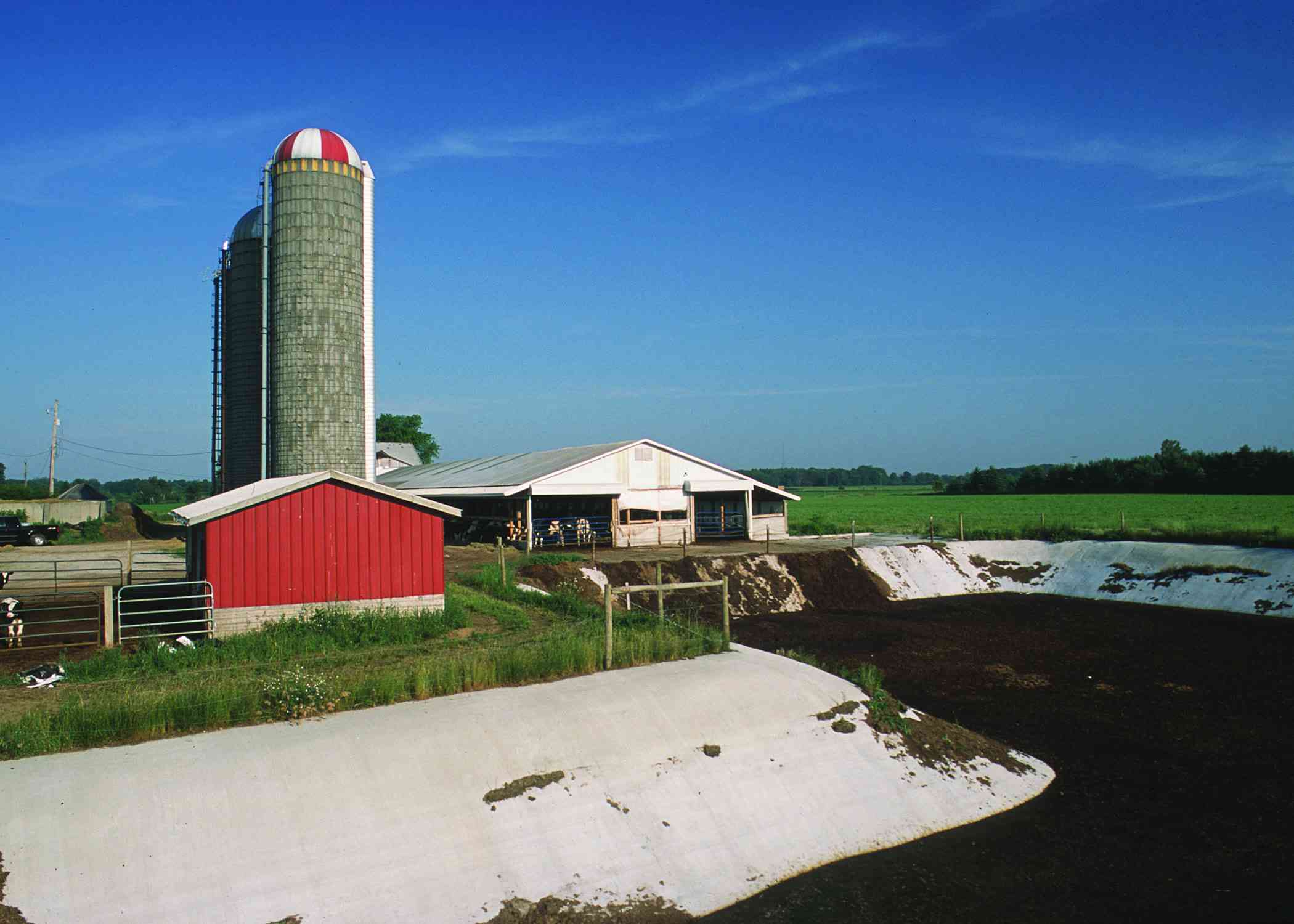
ServicesManure pits
We wash manure pits after your applicator pumps them out, taking the walls and floor back to bare concrete. We wash only: pumping, agitating and spreading stay with your licensed applicator.
About 1–3 days*
Per pit, after pump-out.
Back to bare concrete
Walls and floor. We don’t pump or spread.
After pump-out
Spring, after wheat, or fall before Dec 1.
Hot or cold water
Our washers, your hydrant.
Windsor to Kingston
Lake Erie to Georgian Bay.
* Typical; your quote confirms it.
01 · When to book
Pick the season your pit is pumped, or call when the date’s set. We’ll get back to you to agree a day and a price.
Dec–Mar
Little or no pit work
Pits are usually filling. The rules restrict spreading, not pit washing.
Apr–May
After spring pump-outAbout 1–3 days* per pit
Ontario restricts spreading from Dec 1 to Mar 31 on farms that need a nutrient management plan, so pits fill over winter. They're pumped once fields are fit, often from mid-April. Book when your applicator sets the pump-out date.
late Jul–Aug
After wheat harvestAbout 1–3 days* per pit
Wheat comes off in late July to early August, which opens a summer spreading window. Book when your applicator sets the pump-out date.
Sep–Nov
Before Dec 1 and freeze-upAbout 1–3 days* per pit, plus weather days
Fall pump-outs follow harvest and need to finish before Dec 1 and freeze-up. Book when your applicator sets the pump-out date.
02 · What we wash
Tell us about your pit. We wash; your applicator pumps, agitates and spreads.
You do
We do
03 · Before & after
The end wall of an emptied pit near Simcoe in September 2026: stained up to the manure line on day one, and washed back to bare concrete later in the same job. Photos are lined up and cropped; nothing is added or removed.
More from this work in the gallery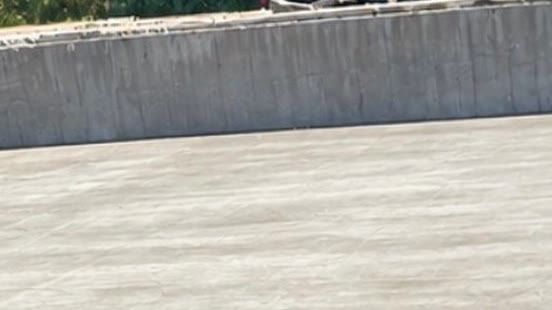
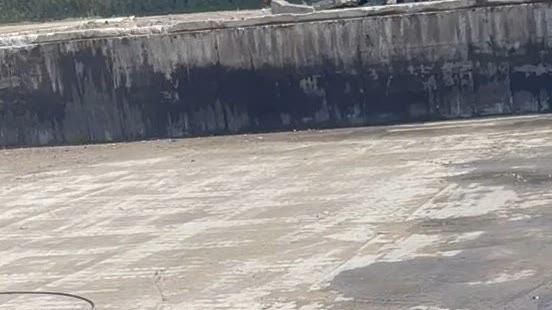
Manure pit end wall · same job · Sep 2026 · near Simcoe, Norfolk County
04 · Farm stories
Manure pit · Norfolk County ·
Thursday, the manure line off the walls. Saturday, the floor washed clean one pass at a time.
Farm kept private
References
Most farmers hear about us from a neighbour. Tell us your county and your pit, and we’ll ask a customer nearby if they’re happy to take your call. No sales pitch from us.
05 · Pricing
Every pit is different, so we price yours after a few questions or photos. These are the things that change the price:
06 · Questions
Something else on your mind? Call or text — you’ll talk to the crew, not a call centre.
No. We wash pits after your licensed applicator pumps them out. Pumping, agitating and spreading stay with them.
As soon as your applicator sets the pump-out date. Pits are usually empty after spring pump-out, after wheat harvest, and in fall before December 1. Short notice? Call or text: if we have room, we'll come.
We wash from the rim or the open end. If a job would need anyone inside a covered pit, we plan it with you first, with gas testing, ventilation, an attendant and a rescue plan, or we don’t go in. Agitation can raise hydrogen sulphide more than 100 times (OMAFA), so it has to be finished and the pit aired out before we start.
Ask us. An under-barn pit is a covered space, so we look at the access with you first and wash from the openings where we can. If it would need anyone inside, we plan it with you first or we don’t go in. Either way, your applicator pumps it down and the barn is aired out before we start.
Yes. Our rig carries hot and cold water pressure washers and hoses, not water. We hook up to your hydrant or tap. If your well is slow or also waters the herd, tell us when you book.
Into the pit, for your applicator’s final pump-out, never a ditch or tile drain. We agree it with you before the day.
About 1–3 days* per pit, depending on its size, what's left after pump-out, access and weather. Your quote confirms yours.
By the job: the size of the pit, what's left after pump-out, access for the rig and whether the pit is open or covered. A few phone photos help us quote.
07 · More services
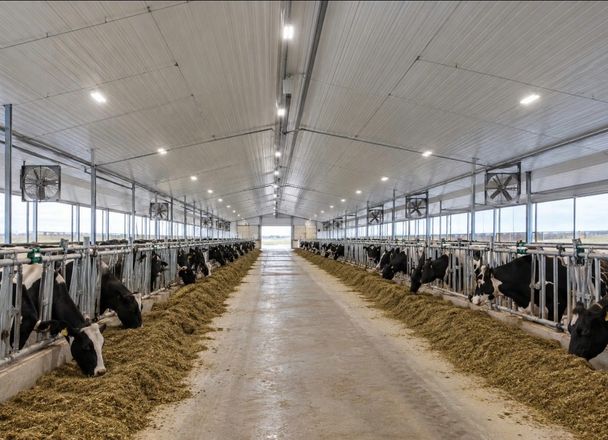
Freestall · Tie-stall · Robot barns
Ceilings and liners, fans, chimneys and head gates, washed panel by panel for your annual barn wash.
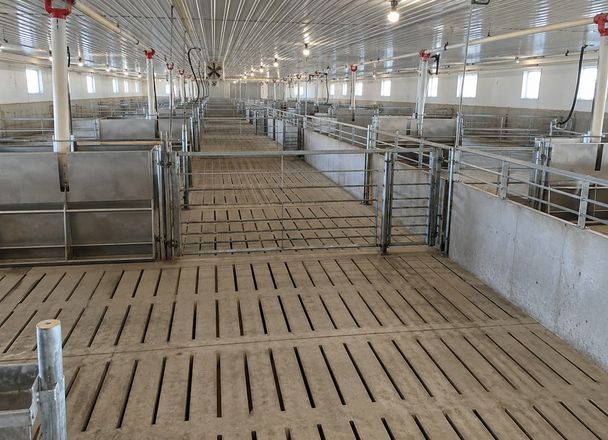
Nursery · Finishing rooms
Pens, gates, slats, feeders, fans and heaters power washed room by room, between batches.
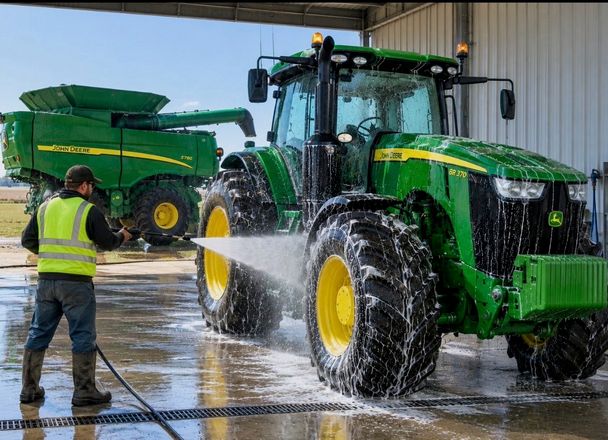
Tractors · Skid steers · Combines
Hot or cold water and degreaser where needed — mud, grease and manure off, ready for the shed, the shop or the sale.
Anything else?
We’ll tell you straight if it’s a job for us.
Ready when you are