Why fines start fires
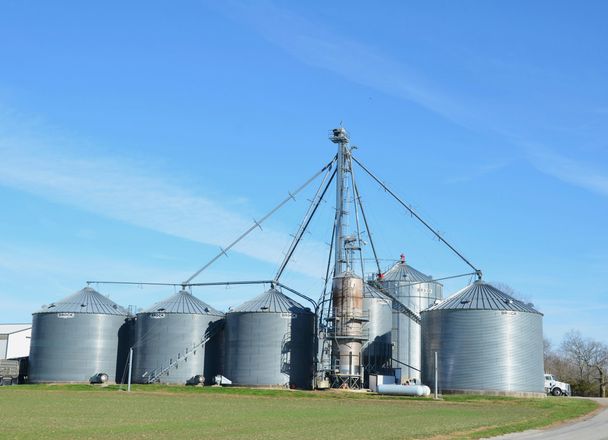
Trash buildup causes about 80 per cent of dryer fires, GSI dryer specialist Randy Sheley told Farmtario in 2022. Fines, chaff and corn’s red dog (OMAFA: “the light peeling material that breaks off from corn kernels”) collect in the columns, screens and plenum. Leftover grain, dirt and debris blocking the columns “can heat and ignite”, Farmtario reported in 2019, which is why dryer fires are most common at the start of harvest.
When to clean it
- At the end of the drying season, after the last corn is dried. GSI’s tips have you clean it out and leave the access doors open for the off-season.
- Again before the first crop goes through, because fires are most common at the start of harvest (Farmtario, 2019).
- During the season, Sheley suggests a dryer “should be totally shut down and cleaned out at least once a week” (Farmtario, 2022).
Before you start
- Empty the dryer and let it cool.
- Shut off and lock out the power, the burner and its fuel, and the fans. GSI’s tips say to “disconnect all power and turn off the gas supply” before any post-season maintenance.
- Don’t wash on a freezing day: the dryer needs time to dry.
Dry first
Sweep, scrape and vacuum the fines, chaff and red dog out of the columns, screens, plenum and base through the access doors. A vacuum keeps the dust where you can get rid of it; compressed air blows fine dust back into the air and over the rest of the site.
Wash down where water helps
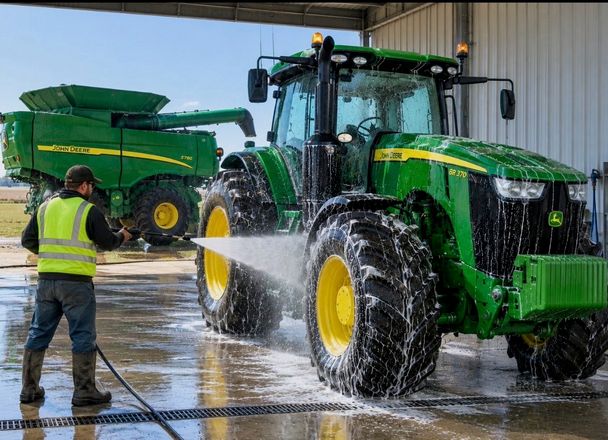
Water is for what a vacuum can’t shift: caked residue, grease, soot and the dryer’s outside.
- Cover the burner with a tarp first. The NGFA’s dryer-fire tips say to do it “especially if you are cleaning with water”. Take the tarp off before the dryer runs again.
- Work from the top down, wetting the dust at low pressure first so it doesn’t fly.
- Cold water does for dust and chaff; hot water cuts grease and soot.
- Keep the water off electrical boxes, controls and sensors. GSI’s tips: “Low or high-pressure water can be helpful, but stay away from electrical boxes and controls.”
Dry it out and grease it
- Open the access doors and let it dry. GSI’s tips say to leave them open during the non-drying season.
- “Lightly lubricate any areas prone to high wear or rust after this type of cleaning” (GSI). Before harvest, an electrician quoted by Farmtario in 2019 adds: grease bearings, change belts and clean out any built-up debris.
Ontario’s agriculture ministry (OMAFA) sums it up: “Regular wash down, housekeeping and clean-up of the dryer and surrounding area is the most effective method to limit dust buildup.”
How we do it
We wash grain elevators and grain dryers once the grain is out. Our rig carries hot and cold water pressure washers and hoses, not water. We hook up to your hydrant or tap.
On a dryer we work the same way as this guide: cold and locked out, dry clean first, then a wash-down from the top with the burner covered and water kept off the controls.
See what we wash on grain systems → · Book a grain elevator or dryer wash →