Why it matters
“Dirty fan shutters can decrease fan airflow up to 40%,” says the University of Kentucky’s Poultry Production Manual. Dust- and feather-covered blades, shutters and grills cut a fan’s output by 30–40%, the manual adds.
Cool-cell pads clog too. Minerals in the water and dirt from outside block the flutes, and mould, mildew and algae grow in the wet pad, so the fans have to work harder to pull air through (Aviagen).
Heaters need the same care. Ontario’s agriculture ministry (OMAFA) says improperly installed or maintained heaters are a common cause of barn fires, and that bedding and dust in the barn are a contributing factor.
Before you start
- Shut off and lock out the power to the fans and heaters you’re cleaning. Kentucky’s manual says to shut off power to thermostatically controlled fans before servicing them.
- Turn the heaters off, let them cool, and shut the gas at the valve.
- Take the winter covers off any hot-weather fans. Kentucky’s manual has them sealed over for winter and unsealed before they run again.
- Turn the cool-cell water off at least 30 minutes ahead, so the pads are dry when you start (Aviagen).
- Cover controllers and thermostats. OMAFA’s farrowing-room guide says to cover or remove fan motors, heaters and controllers before pressure washing.
Fans and shutters
Work from the top down: housings, blades, guards and shutters. Get the dry dust and feathers off first; OMAFA’s barn-fire advice is to clean fans and other motors routinely with compressed air. Then wash, keeping the water off motors and wiring.
How often: Mississippi State’s fan guide says to clean the shutters, blades and guards after every flock. Kentucky’s manual says fan blades and shutters should be cleaned and lubricated every one to three months.
Cool-cell pads
- With the water off, brush or vacuum the loose dirt, cobwebs and feathers off the pads.
- Rinse the pads with a garden hose and a spray nozzle, angled the same way as the flutes. Never use a pressure washer on the pads (Aviagen).
- The pad frame can take a pressure washer. Flush the gutters with the end caps off, clear the sump with a separate pump or a wet vacuum, and flush the header pipe through its end cap or flush tap.
- Aviagen’s guide sets the full clean at every three months, or more often if needed. Where algae have taken hold, follow the pad maker’s advice on products; Aviagen warns against chlorine and other harsh oxidizing chemicals.
Heaters
With the heater off and cool, wash the housings, louvres and hoods. Kentucky’s manual adds that during the heating season, dust should come off the heater fins and filters.
The gas side is different. In Ontario, only a certificate holder may repair or service a gas appliance (O. Reg. 212/01), so burner service, gas checks and repairs go to your licensed gas technician. Book them for the same turnover.
How we do it
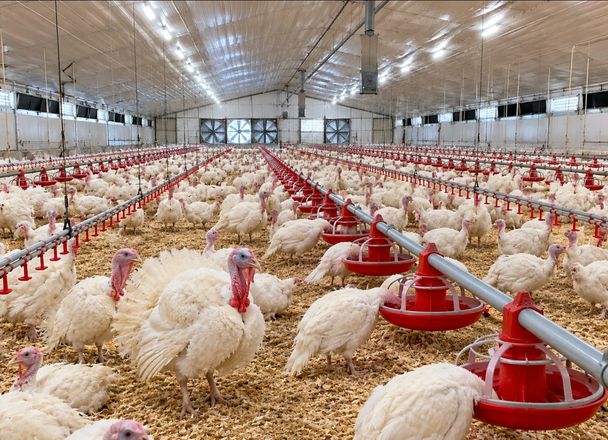
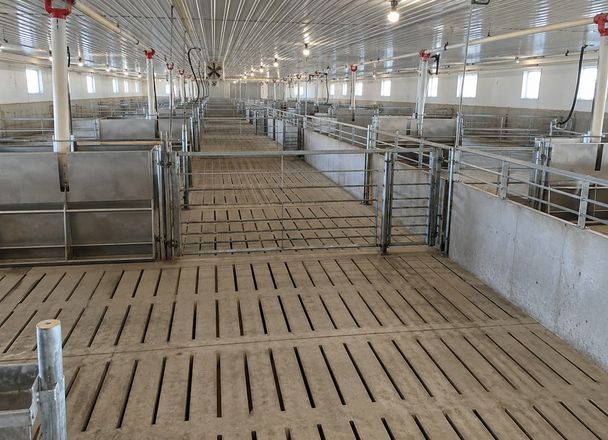
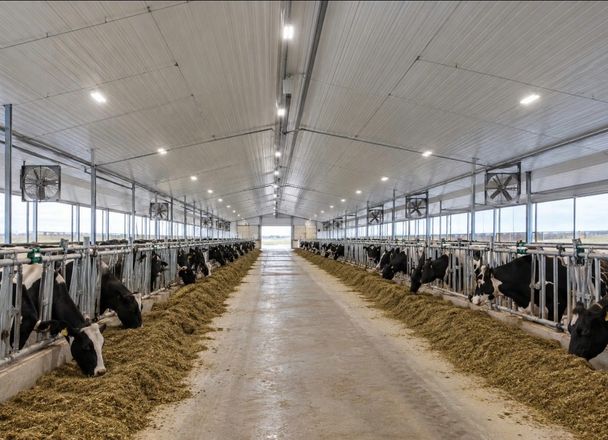
Fans, heaters and cool cells are part of our barn washes: see Poultry barns, Hog barns and Dairy barns. Our trailer rig carries hot and cold water pressure washers and hoses, not water. We hook up to your hydrant or tap.
We wash fan housings, blades, guards and shutters, heater housings, louvres and hoods, and cool-cell walls. The gas side stays with your licensed gas technician.
Pads get a gentle low-pressure rinse, never a pressure washer.