Timed to your groups
Every group, or once a year.
ServicesBeef, veal & calf barns
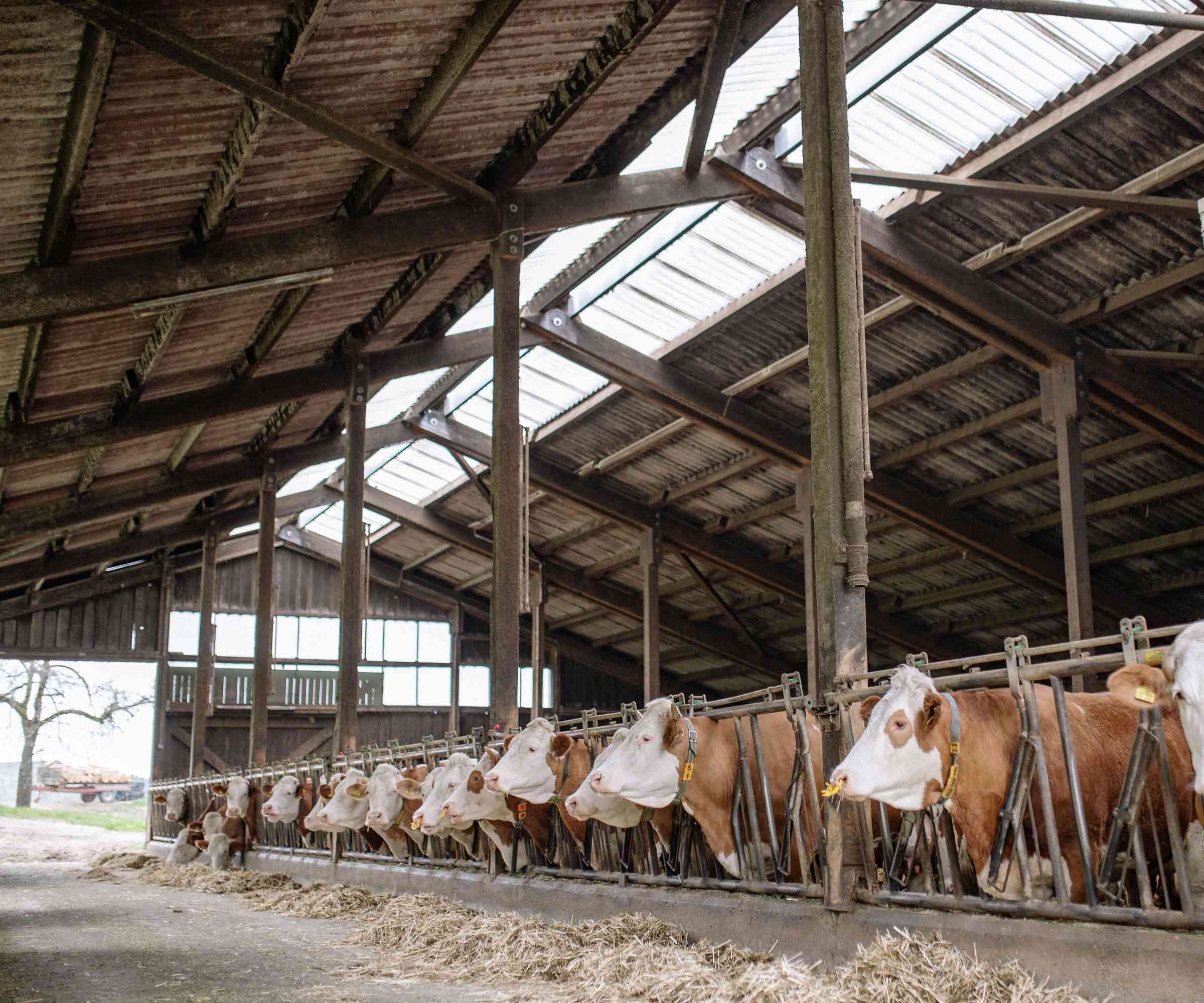
We wash beef, veal and calf barns at your farm: ceilings and walls, pens and gates, feed bunks, calving pens, calf hutches and handling areas, from the top down. Our rig brings hot and cold water pressure washers and hoses, and we hook up to your water. Disinfecting, when you want it, is a Health Canada DIN product at the label rate and contact time.
Timed to your groups
Every group, or once a year.
Ceilings to feed bunks
Pens, gates, hutches and alleys.
Between groups
All in, all out, where you can.
Hot or cold water
Our washers, your hydrant.
Windsor to Kingston
Lake Erie to Georgian Bay.
01 · When to book
Tell us when the barn empties and when the next cattle go in. We’ll get back to you to agree a day and a price.
Any time
Every group
Veal and calf rooms, all in, all outYour quote gives the time
The federal veal code advises all-in, all-out groups where possible, so rooms can be cleaned and disinfected, and leaving cleaned pens empty for a few days (5 days, for example).
Between calves
Calf hutches and calf pensYour quote gives the time
You clear out the bedding; we wash. Stand the hutches where the water drains away and they can dry before the next calf.
When a pen empties
Feedlot and heifer pensYour quote gives the time
Pen by pen as groups ship, or the whole barn when it’s empty.
Dec–Feb
Heated veal and calf rooms between groupsYour quote gives the time
Keep the heat on through the wash and the drying. Cold barns and outdoor hutches are best left for days above freezing.
Mar–May
Calving pens once calving wraps upYour quote gives the time
Many Ontario herds calve in or near the barn early in the year, and calving areas get dirtier as the season goes on, as the federal beef code notes.
Jun–Aug
Cow barns with the herd out on grassYour quote gives the time
An empty barn and warm weather: the quickest drying of the year, and time for the barn to sit empty before cattle come back in.
Sep–Nov
Barns and calving pens before cattle come inYour quote gives the time
The federal beef code advises keeping calving areas free of cattle until just before calving, so wash them while they’re empty.
02 · What we wash
Tell us which barns, pens and hutches. We wash top to bottom, so nothing drips onto clean pens.
You do
We do
03 · References
Most farmers hear about us from a neighbour. Tell us your county and your beef or calf barn, and we’ll ask a beef customer nearby if they’re happy to take your call. No sales pitch from us.
04 · Pricing
Every beef or calf barn is different, so we price yours after a few questions or photos. These are the things that change the price:
05 · Questions
Something else on your mind? Call or text — you’ll talk to the crew, not a call centre.
Between groups. The federal veal code (NFACC, 2017) advises all-in, all-out groups where possible, so rooms can be cleaned and disinfected, and leaving cleaned pens empty for a few days, 5 days for example. Make it a repeat booking and we’ll pencil in each wash.
While it’s empty: when the herd goes out to grass, or before calving. Many Ontario herds calve in or near the barn early in the year, and the federal beef code (NFACC, 2013) advises keeping calving areas free of cattle until just before calving. Short notice? Call or text: if we have room, we’ll come.
Yes. Our rig carries hot and cold water pressure washers and hoses, not water. We hook up to your hydrant or tap. If your well is slow or also waters the cattle, tell us when you book.
Both: our washers run hot or cold, whichever the job needs. Hot water is quicker on grease and caked-on dirt; cold water does for dust and rinsing. Soap or disinfectant goes on only where it’s needed: animal-safe, matched to your farm’s specs.
Yes, after the wash, because disinfectant doesn’t work on dirt. We use a Health Canada-registered product (look for the DIN) at the label rate and contact time: your vet’s choice, or a product we agree with you.
Yes, inside and out, between calves. Clear out the bedding first and line the hutches up where the rig can reach them and the water can drain. Moving them to fresh ground is your call; the veal code suggests at least twice a year.
No, we wash. Clean out the pack and bedding down to the floor first, with your own crew or equipment, and we wash what’s left back to clean surfaces.
Heated veal and calf rooms, yes: keep the barn heat on through the wash and the drying. Cold barns and outdoor hutches are best left for days above freezing, so the water drains and the barn can dry.
Yes, and barns for other cattle too. Tell us how your barn and handling system are set up, and how the animals will be kept out of the section we’re washing.
By the job: barn type and size, how many pens or hutches, ceiling height and build-up, and whether you want it disinfected. A few phone photos help us quote.
06 · More services
Freestall · Tie-stall · Robot barns
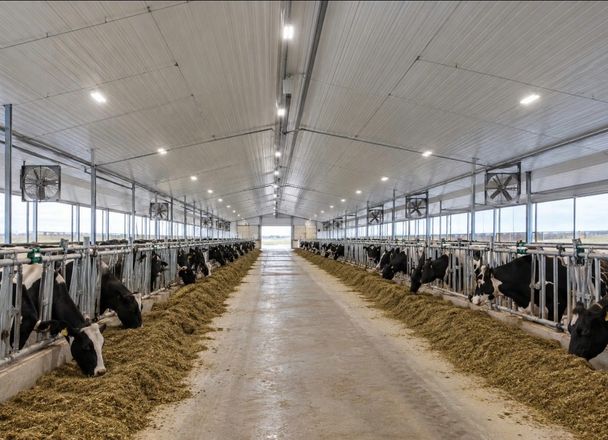
Ceilings and liners, fans, chimneys and head gates, washed panel by panel for your annual barn wash.
Hog trailers · Triple-decks
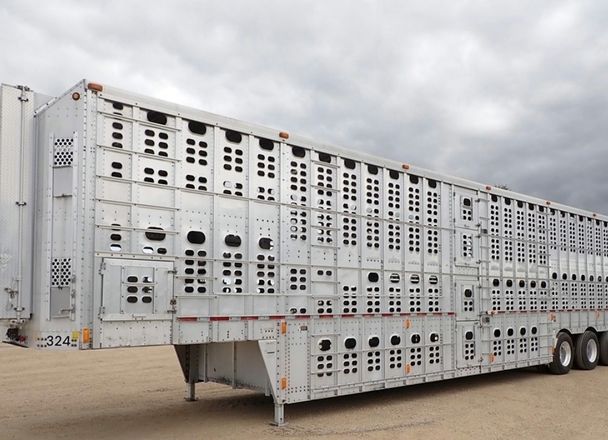
Every deck and the ramp washed from the top deck down at your wash bay, between loads.
Tractors · Skid steers · Combines
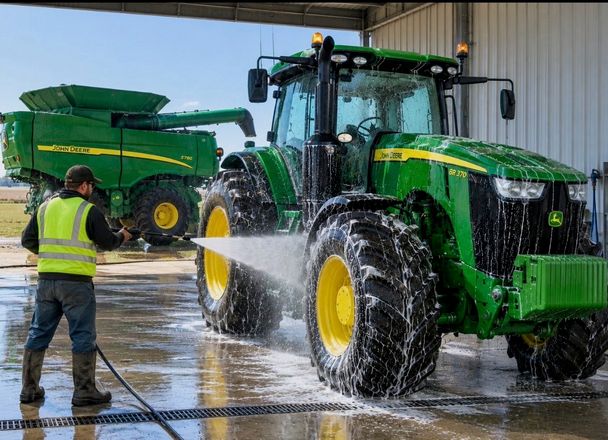
Hot or cold water and degreaser where needed — mud, grease and manure off, ready for the shed, the shop or the sale.
Anything else?
We’ll tell you straight if it’s a job for us.
Ready when you are