Between crops
Once the old crop is out.
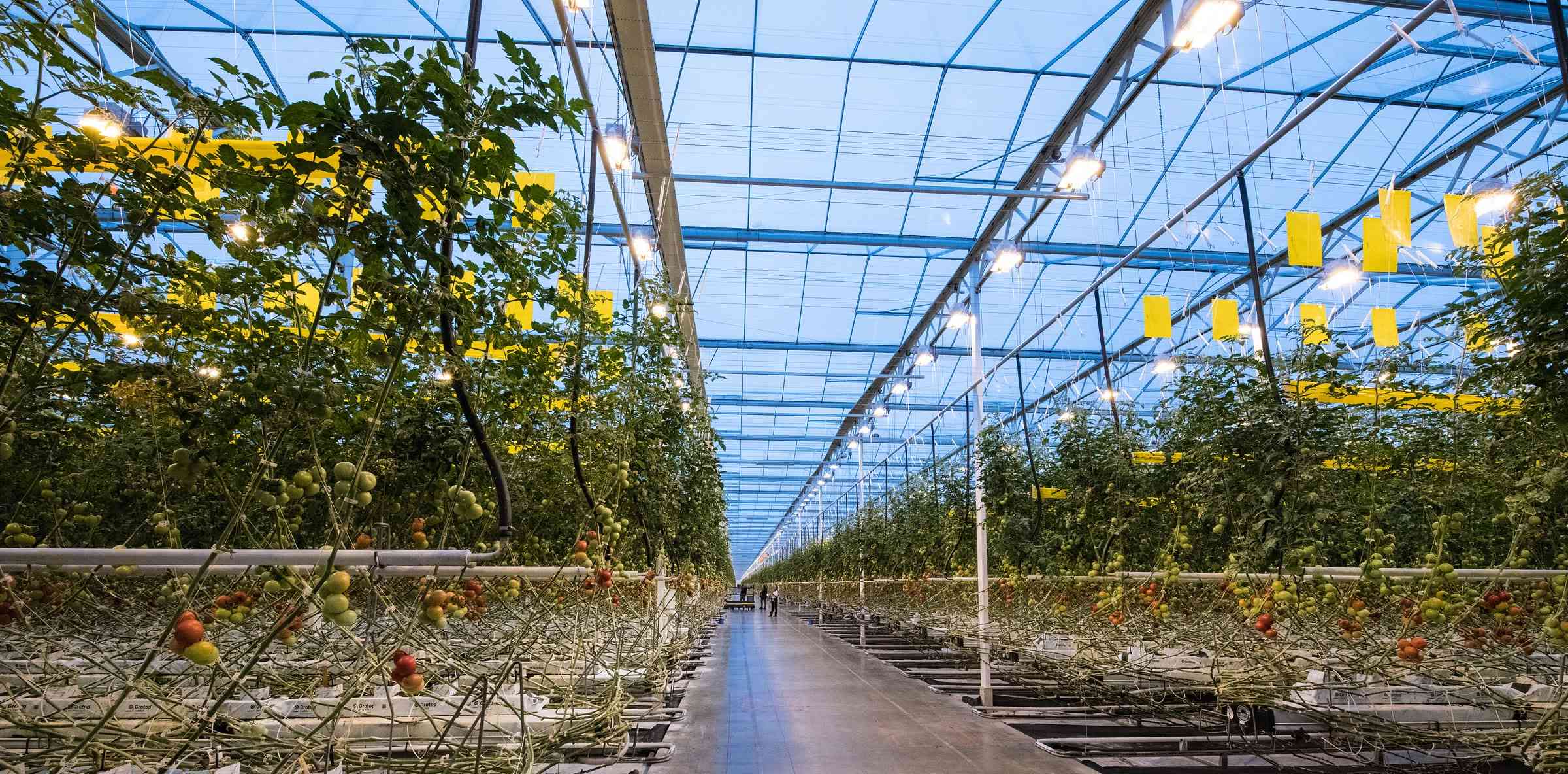
ServicesGreenhouses
We wash vegetable and flower greenhouses between crops, once the old crop is out: the structure, gutters, pipes, walkways and floors, and the glass or poly where we've agreed it with you. Our rig brings hot and cold water pressure washers and hooks up to your water; you name the cleaner.
Between crops
Once the old crop is out.
Structure to floor
Gutters, pipes and walkways too.
Your cleaner
Used to its label.
Hot or cold water
Our washers, your hydrant.
Windsor to Kingston
Lake Erie to Georgian Bay.
01 · When to book
Tell us when the crop comes out and when the next one goes in. We’ll get back to you to agree a day and a price.
Any time
Any time a house comes empty
Propagation houses and single rangesYour quote gives the time
Tell us the empty date and the planting date, and we'll pick a wash day that fits.
Dec–Feb
Vegetable houses between the old crop and the newYour quote gives the time
Ontario's agriculture ministry describes a major clean-up at the end of each year, before the spring crop is replanted. Keep the house warm: the ministry says warm temperatures help disinfectants work.
Mar–May
Little or no cleanout work
Most vegetable houses are in crop, and flower growers are busy with spring sales. A range empty early? Call or text: if we have room, we'll come.
Jun–Aug
Flower and bedding-plant ranges between cropsYour quote gives the time
Tell us when a range comes empty and when the next crop goes in. Warm weather helps a washed house dry.
Sep–Nov
Vegetable cleanouts as the crop comes outYour quote gives the time
In Leamington, crops are commonly pulled in late November to early December (HortiDaily, Feb 2017). Book when you set the pull date.
02 · What we wash
Tell us what you want done. We wash from the peak down, so dirt from above never lands on a clean floor.
You do
We do
03 · References
Most farmers hear about us from a neighbour. Tell us your county and your greenhouse, and we’ll ask a greenhouse customer nearby if they’re happy to take your call. No sales pitch from us.
04 · Pricing
Every greenhouse is different, so we price yours after a few questions or photos. These are the things that change the price:
05 · Questions
Something else on your mind? Call or text — you’ll talk to the crew, not a call centre.
Your greenhouse once the crop is out: the structure from the top down, gutters, heating pipes and pipe rails, walkways and floors, and the glass or poly where we've agreed it with you. Benches, troughs, carts and crates can go in the scope too. We wash; you take out the crop and flush the irrigation.
Between crops, when the house is empty. Ontario's agriculture ministry describes a major clean-up at the end of each year, before the spring crop is replanted. Flower ranges go when they come empty. Short notice? Call or text: if we have room, we'll come.
Because dirt gets in the way. Ontario's agriculture ministry says debris or organic matter left on surfaces can react with a disinfectant and neutralize its active ingredient. So the crop and debris come out, we wash, and the disinfectant goes on last.
Yours, as a rule: you name the cleaner, and we wash with it to its label. Have the label and safety data sheet ready. Disinfecting stays with you or your licensed applicator: we leave the house clean, so the disinfectant can do its job.
Yes. Our rig carries hot and cold water pressure washers and hoses, not water. We hook up to your hydrant or tap. Tell us where the wash water should go.
We wash the structure at low pressure with a wide tip, from the peak down, as an Ontario agriculture ministry specialist advises. Tell us your covering, its age and anything fragile when you ask for a quote, and we'll agree the method with you first.
Only where we've agreed the access and method with you first. We never walk on glass or poly. Tell us about your roof and gutters when you ask for a quote, and we'll say what we can do safely.
Power goes off where we spray, and lights, climate controls, panels and sensors are covered first. Irrigation lines, drippers and tanks are flushed by your crew; we wash around them.
Yes, with the house warm. Ontario's agriculture ministry says warm temperatures make disinfectants more effective, and lower temperatures need longer contact times. Heat and vent the house before planting.
We quote by the job: floor area and ranges, gutter height, glass or poly and what's in the scope, how much residue is left, whose cleaner, and the season. Tell us about your houses and we'll quote them.
06 · More services
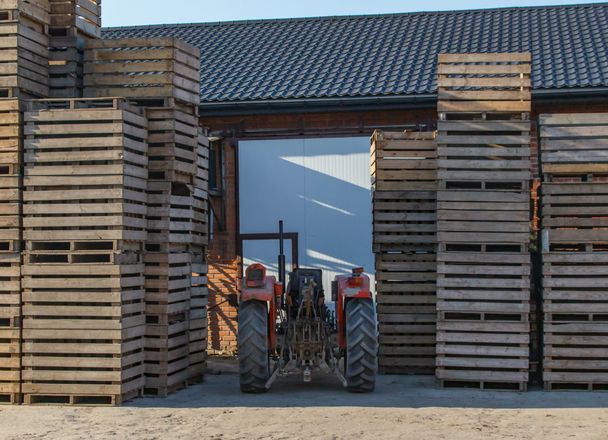
Potato storage · Cold storage · Packing sheds
Storage, bins and packing lines washed down once the storage empties, before the new crop goes in.
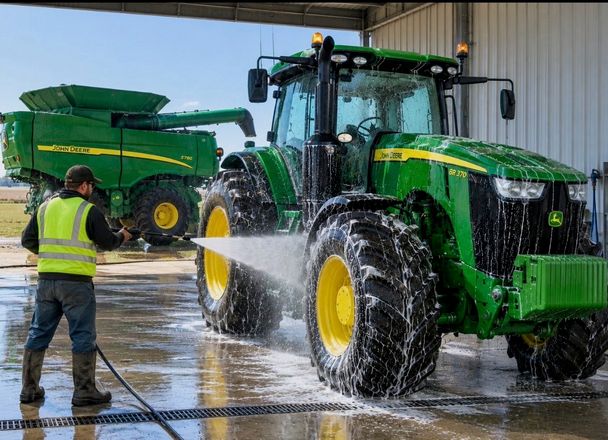
Tractors · Skid steers · Combines
Hot or cold water and degreaser where needed — mud, grease and manure off, ready for the shed, the shop or the sale.
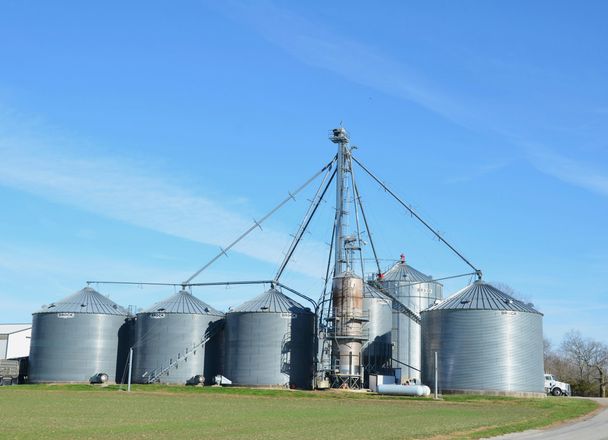
Elevators · Grain dryers
Grain elevators and dryers washed down once the grain is out, clearing the dust and fines of harvest.
Anything else?
We’ll tell you straight if it’s a job for us.
Ready when you are