Clean and dry
What the codes of practice ask for.
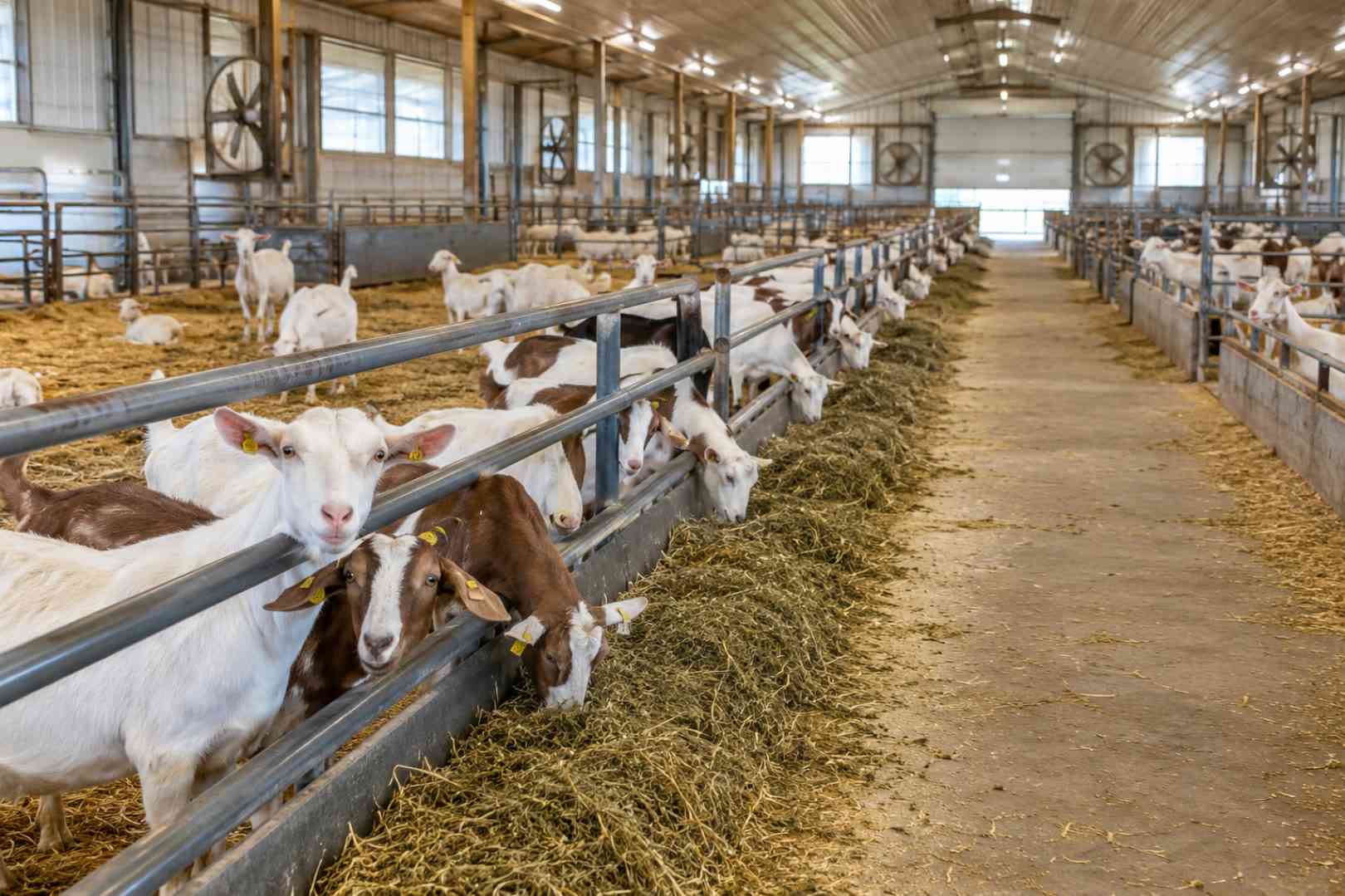
ServicesSheep & goat barns
We wash sheep barns, lambing and kidding pens and dairy goat barns at your farm: ceilings and walls, pens and gates, feeders, waterers and fans, with hot and cold water pressure washers hooked up to your water. Canada's sheep Code of Practice asks for pen dividers to be kept clean, and for water bowls, troughs and ventilating fans to be cleaned regularly.
Clean and dry
What the codes of practice ask for.
Pens to ceilings
Feeders, waterers, fans, walls.
Between groups
After lambing or kidding.
Hot or cold water
Our washers, your hydrant.
Windsor to Kingston
Lake Erie to Georgian Bay.
01 · When to book
Pick the season that suits your flock or herd, or call when the pens empty. We’ll get back to you to agree a day and a price.
Any time
Every lambing or kidding group
Lambing and kidding pens (jugs)Your quote gives the time
Accelerated flocks lamb 3–5 times a year (OMAFA), so pens empty all year round. Bedding out first; the pens need to dry before fresh bedding goes in.
Once a year
The whole barn, ceilings downYour quote gives the time
Ceilings, walls, fans, pens, feeders and waterers in one visit, in the season your flock or herd is out or lightest.
Dec–Feb
Warm, closed barns, between groupsYour quote gives the time
Only barns that stay above freezing inside. Plan ventilation so the barn dries before the next group goes in.
Mar–May
Lambing and kidding pens, once the group is throughYour quote gives the time
Pens empty in turn as ewes and does move out with their young. Curtain-sided barns: wait until nights stay above freezing.
Jun–Aug
The whole barn, with the flock out on grassYour quote gives the time
Spring-lambing flocks lamb in April or May to make the most of the grass, as OMAFA describes it, so the barn can stand empty. Warm weather dries it fastest.
Sep–Oct
The whole barn, before the flock comes inYour quote gives the time
Nights start freezing in October. Curtain-sided barns are best done by mid-October.
02 · What we wash
Tell us what you want done. We wash top to bottom, so the dirt from above never lands on clean pens.
You do
We do
03 · References
Most farmers hear about us from a neighbour. Tell us your county and your sheep or goat barn, and we’ll ask a sheep or goat customer nearby if they’re happy to take your call. No sales pitch from us.
04 · Pricing
Every sheep or goat barn is different, so we price yours after a few questions or photos. These are the things that change the price:
05 · Questions
Something else on your mind? Call or text — you’ll talk to the crew, not a call centre.
When the pens or the barn empty. Lambing and kidding pens go between groups; the whole barn goes once a year, often in summer with the flock out on grass or in the fall before it comes in. Short notice? Call or text: if we have room, we'll come.
Yes. Lambing pens, kidding pens and jugs, pen dividers and gates, washed between groups once the bedding is out. Tell us how many pens and when they empty.
Yes. Our rig carries hot and cold water pressure washers and hoses, not water. We hook up to your hydrant or tap. If your well is slow or also waters the animals, tell us when you book.
No. We wash; we don’t muck out. Clean the bedding pack out down to the floor first, and we wash what’s left from the ceiling down.
We wash the outside surfaces of goat milking parlours: walls, floors, stands and the outside of the milking units. We don’t wash the milking system’s internal components; those stay with your own wash routine.
Yes, as part of the barn wash. Canada's sheep Code of Practice (2013) asks for water bowls and troughs and ventilating fans to be cleaned regularly, and the goat code (2022) asks for feeders to be cleaned when they're soiled. Fan motors and controllers get covered first.
Yes, after the wash, when you want it, because disinfectant doesn’t work on dirt. We use a Health Canada-registered product (look for the DIN) at the label rate and contact time: your vet’s choice, or a product we agree with you.
Both: our washers run hot or cold. Hot water is quicker on grease and caked-on dirt; cold water does for dust and rinsing. Soap or disinfectant goes on only where it's needed: animal-safe, matched to your farm's specs.
It depends on the barn: how many pens, the build-up and what’s in the scope. Tell us about yours and your quote gives the time.
By the job: barn size and pen count, ceiling height and build-up, whether the bedding is out, and how many fans, feeders and waterers. A few phone photos help us quote.
06 · More services
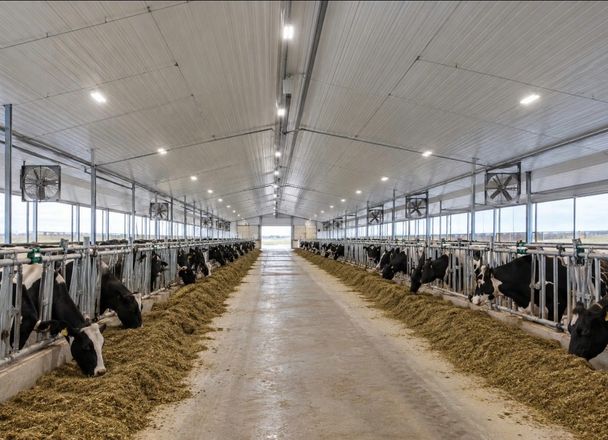
Freestall · Tie-stall · Robot barns
Ceilings and liners, fans, chimneys and head gates, washed panel by panel for your annual barn wash.
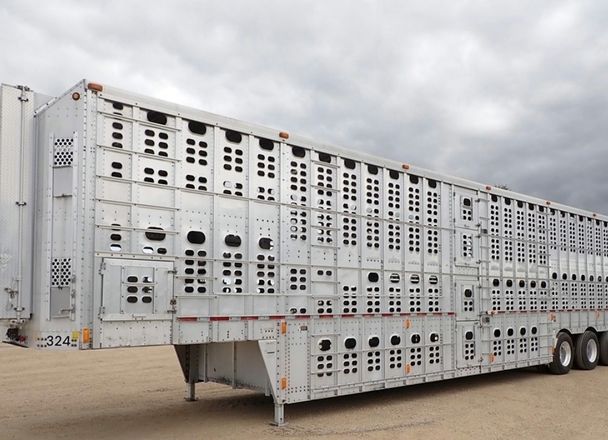
Hog trailers · Triple-decks
Every deck and the ramp washed from the top deck down at your wash bay, between loads.
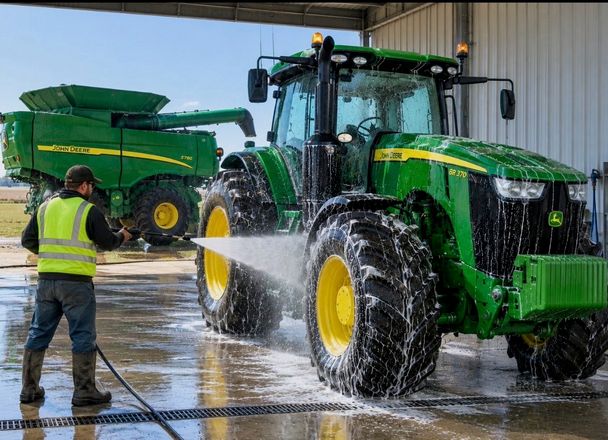
Tractors · Skid steers · Combines
Hot or cold water and degreaser where needed — mud, grease and manure off, ready for the shed, the shop or the sale.
Anything else?
We’ll tell you straight if it’s a job for us.
Ready when you are